November 8, 2026
Business Central Dimensions in Financial Reports: Expenses by Function, Disclosed by Nature
- IFRS 18
- Business Central
By Shailesh Apte, Chartered Accountant and Business Central Solution Architect
Tejo Components Ltd presents its expenses by function: cost of sales, distribution costs, administrative expenses. Its board is used to that view, and so are its lenders.
Its ledger, though, is by nature: one salaries account, one depreciation account. A FUNCTION dimension on each posting says which line the cost belongs to. That's how Parts 1 and 2 built the income statement in Business Central Financial Reports.
IFRS 18 keeps the function view but asks a new question: how much depreciation, staff cost and inventory write-down sits inside each line? In Business Central, the answer is a column definition, because every cost already carries both labels: the account says what it is, the dimension says what it was for.
This post builds that note with dimensions in Financial Reports, then runs it for every office with dimension perspectives.
What IFRS 18 asks for
IFRS 18 requires an entity that presents by function to disclose, in a single note, five specified expenses by nature:
Depreciation
Amortisation
Employee benefits
Impairment losses and reversals (IAS 36)
Write-downs and reversals of inventories
For each one, the note shows the total and how much sits in each function line. For example, Tejo's depreciation of 640 is split 400 in cost of sales, 180 in distribution costs and 60 in administrative expenses.
Step 1: Make FUNCTION reliable
Three settings make the tagging reliable:
FUNCTION as Global Dimension 1 (values COS, DIST, ADMIN), so Financial Reports can filter on it directly. If both global dimensions are taken, use an analysis view.
Default dimensions on employees and fixed assets, so postings pick up the right value automatically: a warehouse forklift's depreciation lands in COS, the finance team's salaries in ADMIN.
Value Posting = Code Mandatory on every operating expense account, so nothing posts without a function. Accounts that only ever belong to cost of sales, such as cost of goods sold and inventory write-downs (20150), get FUNCTION = COS with Value Posting = Same Code.
Using a DEPARTMENT dimension instead? Map departments to functions in Dimension 1 Totalling, for example WHSE|PURCH for cost of sales.
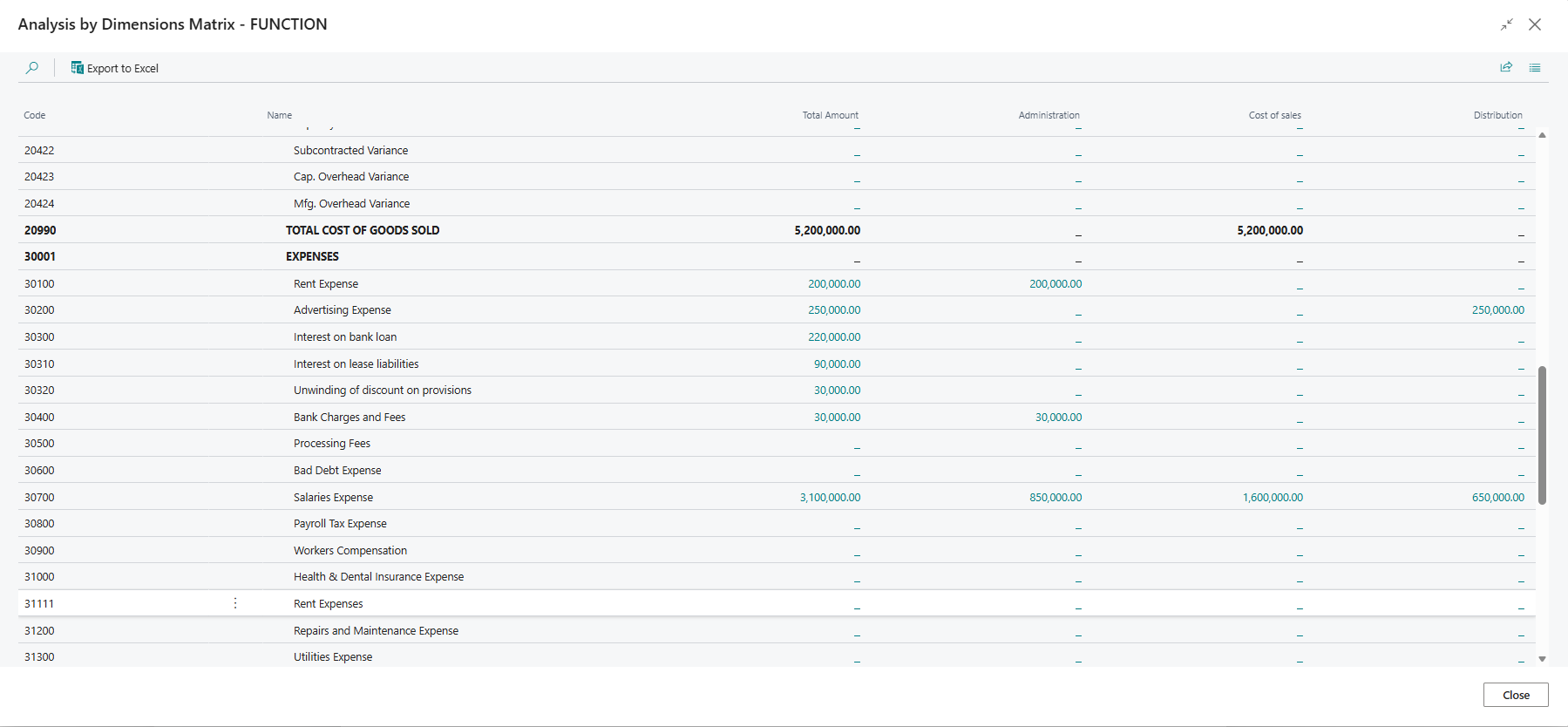
Part 1’s completeness check (CHK2) catches anything untagged. For a quick look, open Analysis by Dimensions with FUNCTION across the top: each account’s total sits next to its cost of sales, distribution and administration amounts. If an operating expense account’s total is more than the three added together, part of it has no function. Financing accounts, such as interest on the bank loan, correctly show a total with no function.
Step 2: The by-nature note as a matrix
Financial Reports builds the note as a matrix: natures down the side (row definition), functions across the top (column definition). The columns are the three function lines from the face of the income statement, with the same names.
In Part 2, every operating expense account went into one category, Operating: Expenses by nature. That's fine for the income statement, but the note needs each specified expense on its own row, so the rows use account numbers. If you prefer categories, add a child category for each nature and set Totalling Type to Account Category.
Row definition IFRS18-NAT:
Row No. | Description | Totalling Type | Totalling |
|---|---|---|---|
N10 | Depreciation | Posting Accounts | 31600|31610 |
N20 | Amortisation | Posting Accounts | 31620 |
N30 | Employee benefits | Posting Accounts | 30700..31000 |
N40 | Impairment losses and reversals | Posting Accounts | 31630 |
N50 | Inventory write-downs and reversals | Posting Accounts | 20150 |
N60 | Total specified expenses | Formula | N10+N20+N30+N40+N50 |
Column definition IFRS18-BYF:
Column No. | Header | Column Type | Dimension 1 Totalling | Formula |
|---|---|---|---|---|
C1 | Cost of sales | Net Change | COS | |
C2 | Distribution costs | Net Change | DIST | |
C3 | Administrative expenses | Net Change | ADMIN | |
C4 | Total | Formula | C1+C2+C3 |
Leave Show Opposite Sign off on these rows so expenses print as positive amounts, and set Rounding Factor to 1000 on each column.
Run it, and Tejo's note builds itself (£'000):
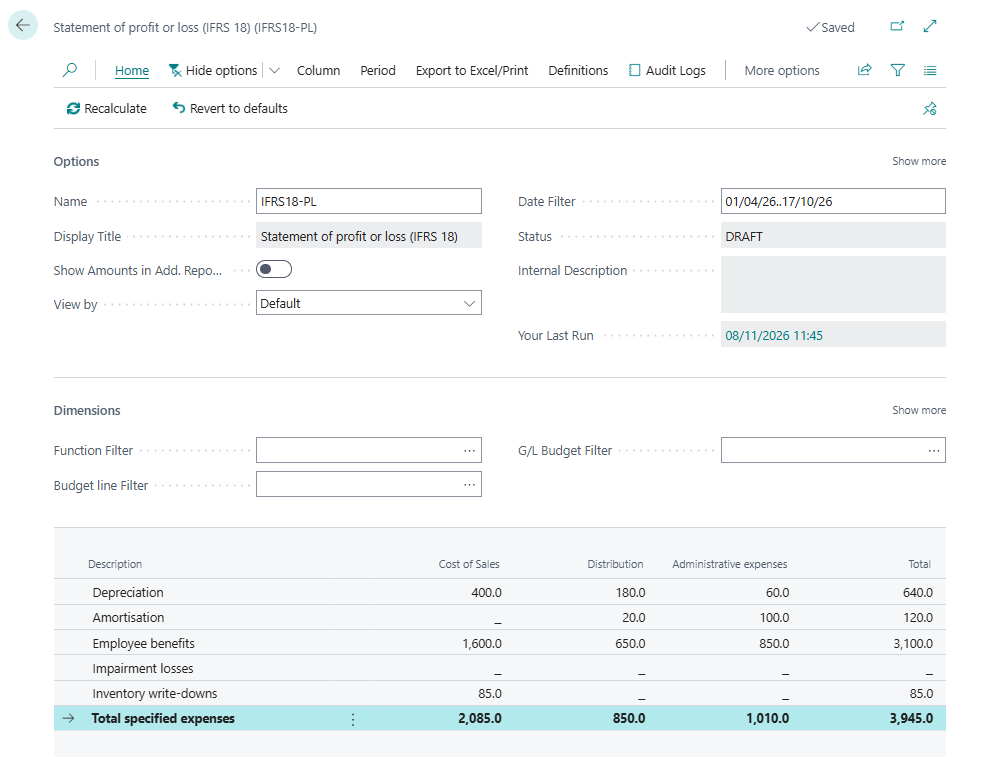
Figure 1: Specified expenses by nature, split by function (IFRS18-NAT rows, IFRS18-BYF columns)
Two checks make this audit-ready:
The Total column agrees to the trial balance for the same accounts. A difference means untagged postings.
Each column is part of an income statement line, never more.
The note picks out only five expenses, so each column stays below its line in Tejo's income statement from Part 1 (Figure 2): cost of sales 2,085 of 7,200, distribution costs 850 of 1,100, administrative expenses 1,010 of 1,500. The rest is mainly the cost of goods sold and overheads, which are not specified expenses.
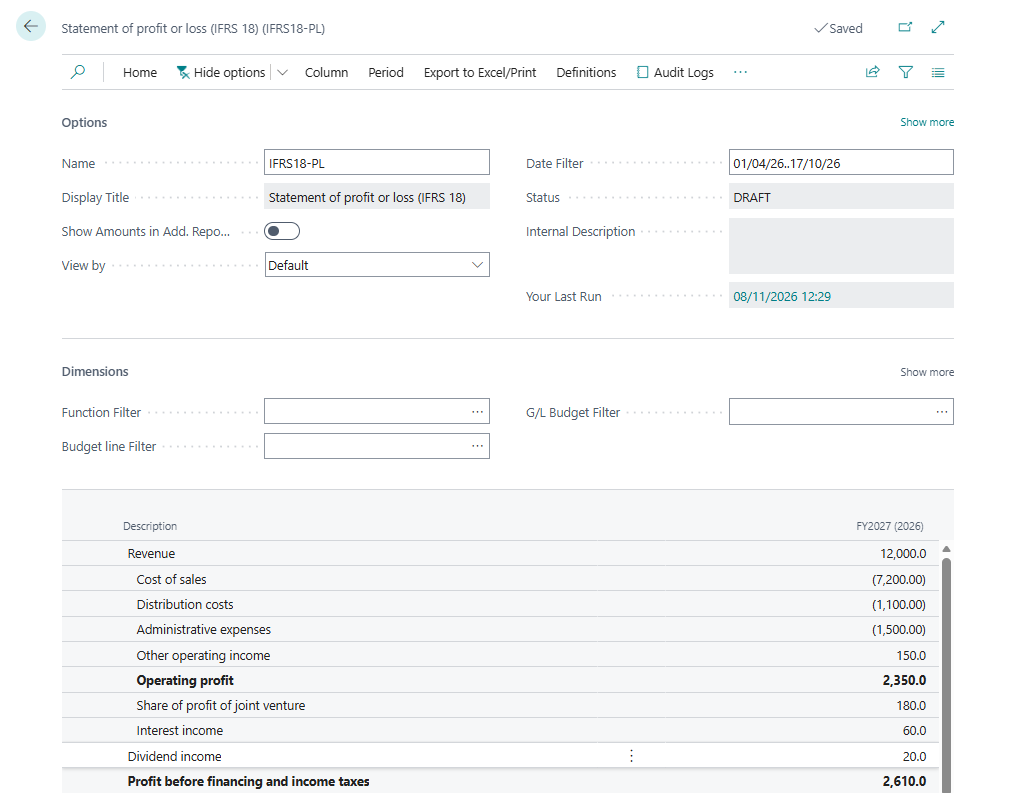
Figure 2: Tejo's income statement from Part 1 (IFRS18-PL), the source of the 7,200, 1,100 and 1,500
Step 3: One run for every office with dimension perspectives
Tejo has a UK head office and a Lisbon sales office, recorded in an OFFICE dimension (Global Dimension 2).
The 2026 release wave 1 added dimension perspectives: run a financial report over all values of a dimension at once. Choose OFFICE, run once, and Business Central produces the matrix for the company, the UK and Lisbon, each on its own Excel tab.
The Lisbon tab shows employee benefits of 250 in distribution costs, its sales team. Everything else sits in the UK.
The same perspective runs the functional income statement per office, so country managers get their own P&L from the same definition the auditors see.
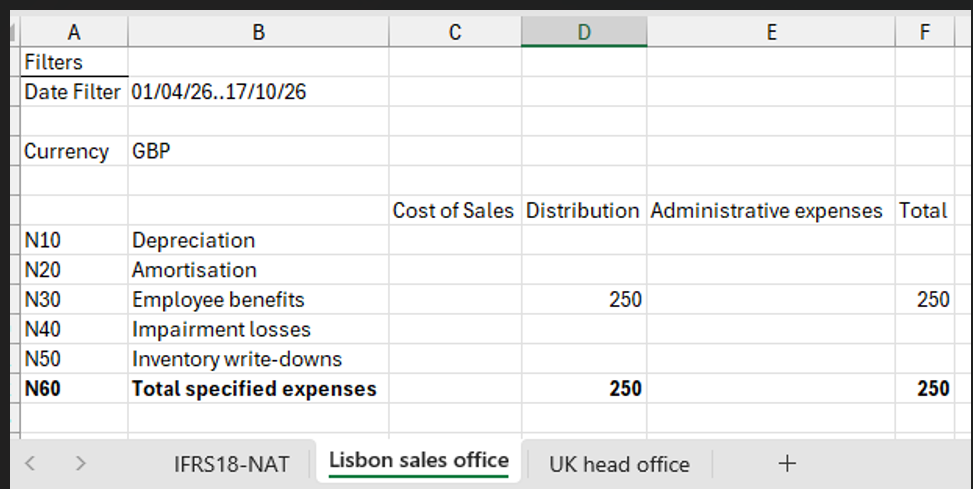
Figure 3: IFRS18-NAT run once with the OFFICE dimension perspective: A tab for the company and one for each office
What we have now
From a single ledger, Tejo's Financial Reports produce:
the functional income statement for the face of the accounts
the specified-expenses-by-nature note, split by function
both views per office, in one run
One ledger, two presentations, zero reconciling journals.
Part 4 turns to the requirement that will change board packs the most: management-defined performance measures. Tejo's "adjusted operating profit" is about to move into the audited notes, and Business Central Financial Reports can build that reconciliation too.